Who gets more of your money? Your family, or the CRA?
For incorporated business owners watching too much of their profits disappear in tax. Steve designs the strategy that grows your retained earnings tax-free, lets you borrow against them without personal tax, and writes off the interest. 30 minutes of your week could save you 5 to 6 figures in tax every year you're in business.
The strategy does three things the average policy can't.
When a corporate-owned whole life policy is properly designed, it solves the three biggest tax problems incorporated business owners face. Tax-free growth. Tax-free access. Tax-deductible interest. Here's how each one works.
Tax-Free Growth Inside Your Corp
The cash value grows tax-deferred inside the policy under Canadian tax law. Not affected by stock market drops. Not affected by economic downturns. The growth compounds year after year, and the longer it runs, the more efficient it gets.
Access Without Personal Tax
Instead of withdrawing the cash value (which would trigger tax), you borrow against it. The loan proceeds aren't income, so no personal tax is triggered. The policy keeps compounding while you've borrowed. You access your money without giving a chunk to the CRA.
Write Off The Interest
When the borrowed funds are used for investment purposes, the loan interest is tax-deductible under Canadian tax law. The same money grows your wealth, pays you back, and reduces your tax bill. You become your own bank.
One client's before and after.
A consultant in energy efficiency. Making good money. Watching over 50% of his income go to taxes, fees, and costs. His bank and accountant kept pushing RRSPs. Here's what happened when Steve redesigned the structure.
- 50% of income disappearing in tax, fees, and interest
- $15,000 a year paid to the bank in loan interest
- Retained earnings sitting trapped, taxed on withdrawal
- RRSPs as the only "tax strategy"
- Burnout. No vacation in five years.
- Saved approximately $15,000 in interest payments per year
- Reduced personal taxes by 12%, keeping $11,500+ per year
- Properly designed whole life compounding tax-efficiently
- Projected additional $3.2 million for retirement
- Booked first family vacation in five years
Numbers as quoted by client. Individual results vary based on underwriting, contribution levels, and policy design.
From your first call to your first compounding year.
Three steps. No surprises. No pressure to commit at any stage.
Intro Call
30 minutes
A casual conversation to understand where you're at. Your business. Your situation. What's keeping you up at night. No jargon. No pressure. No sales pitch. If there's a fit, we go deeper. If not, you walk away with clarity.
Discovery and Illustration
Two sessions, roughly 90 minutes total
Steve models the strategy for your specific corporation. Shows you exactly how a properly designed whole life policy would compound year after year inside your corp. Answers every question. You leave with a complete picture before you decide anything.
Implement and Compound
4 to 6 weeks for underwriting
When you're ready, the application takes about 30 minutes. Policy is issued within 4 to 6 weeks depending on underwriting. Tax benefits start in year one. From there, bi-annual reviews keep the strategy compounding for decades.
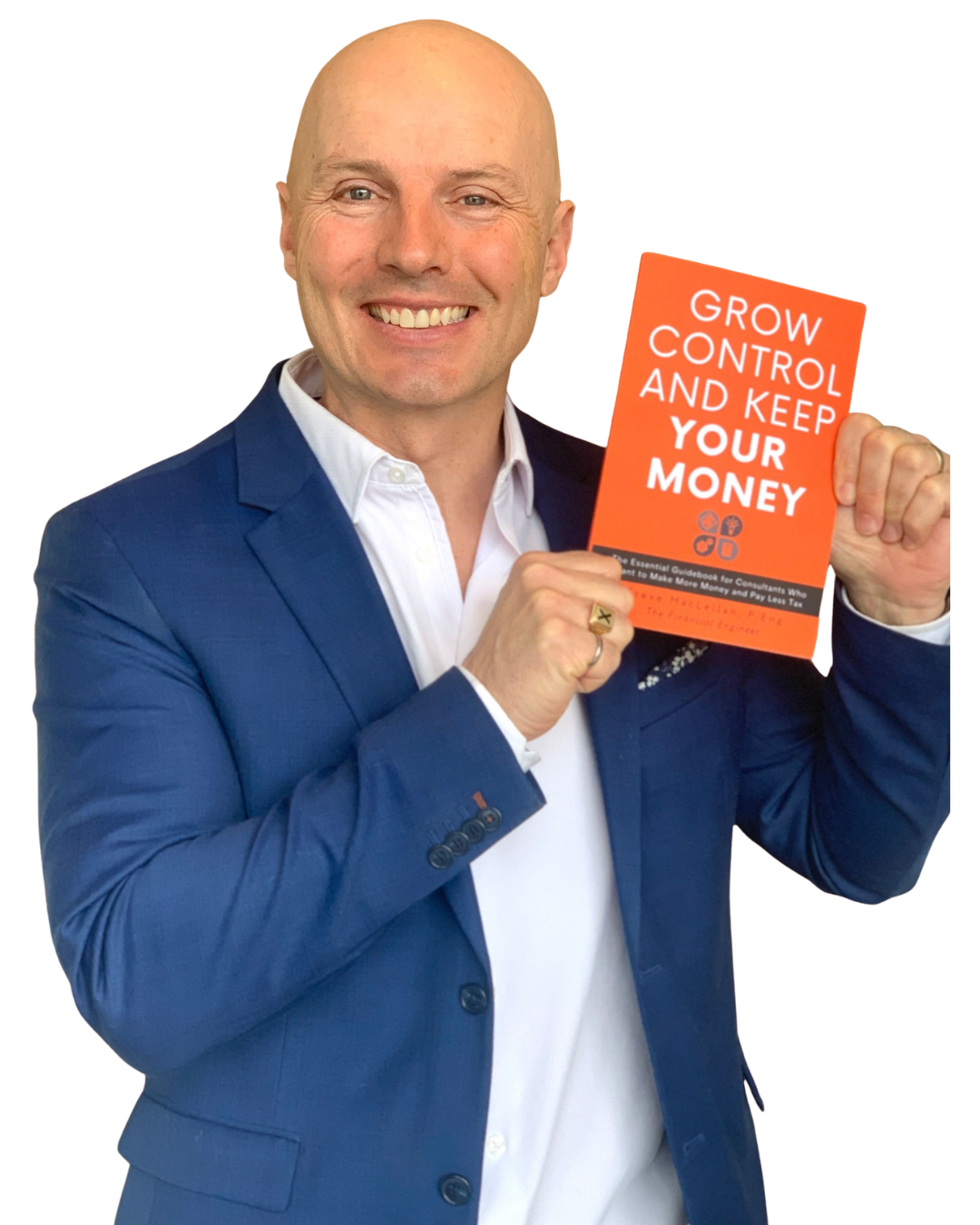
I'm not here to push products. I'm here to solve problems. With a background in engineering, I bring analytical precision to financial planning. I don't guess. I don't push products. I design solutions that actually work.
Questions Steve hears on almost every call.
What is Corporate Owned Whole Life Insurance?
A whole life insurance policy that sits inside your corporation instead of being owned personally. Your company pays the premiums. The cash value grows tax-free inside the corp. When you need access, you borrow against it instead of withdrawing. No personal tax triggered.
Think of it like a high-interest, tax-free savings account inside your corporation. One you can access whenever you want, without giving a chunk of it to the CRA. It also provides a death benefit, creditor protection, and isn't affected by the stock market or the economy.
When it's designed properly, it's one of the most powerful wealth-building tools available to incorporated business owners.
How does this actually work?
You fund a properly designed whole life policy inside your corporation using retained earnings. The cash value grows tax-free year after year. It never goes down. It's completely protected from market volatility.
When you want access to that money, you don't withdraw it. That would trigger tax. Instead, you borrow against it. You use the policy as collateral and set up a line of credit. You get access to your money without paying personal tax on it. The policy keeps growing in the background.
It's like getting access to your money tax-free while it continues to compound. That's the power of a properly designed policy.
What's the return on this?
This isn't like the stock market where you're chasing high returns and hoping for the best. A properly designed whole life policy gives you steady, compounding growth. Currently around 4% or more, tax-free.
That might not sound exciting compared to what you hear about stocks or crypto. But most people forget: it's not about how much you make. It's about how much you keep.
When you factor in that this growth is tax-free, protected from creditors, not affected by the market, and accessible without triggering personal tax, it often outperforms most traditional investments over the long term. With significantly less risk. And you can actually sleep at night.
Why haven't I heard of this before?
There's a few reasons. Most financial advisors are trained to sell mutual funds and term insurance. It's easier. It's what the masses understand. Whole life takes more work to explain.
And this is the big one. Most advisors don't actually understand how to design a whole life policy properly. When it's designed wrong, it's expensive, inflexible, and benefits the advisor more than the owner. That's where whole life gets its bad reputation.
But when it's designed right, it's a completely different product. That's why you need to work with someone who specialises in this.
Isn't whole life insurance a bad investment?
Steve hears this all the time. And honestly, most of the time, it's true. Most whole life policies are bad investments.
There's two ways to design a whole life policy. One way is expensive, inflexible, and benefits the advisor. High commissions. Low cash value. That's what most people get sold.
The other way is low cost of insurance, high cash value, and built to benefit the owner. That's what Steve designs.
Same product. Completely different outcome.
So when someone says whole life is a scam or a bad investment, they're usually right about the first type. But a properly designed policy is a different conversation entirely.
How much does it cost?
Do you consider insurance an asset or an expense? If you see it as an expense, most policies are designed that way. The policies Steve designs are different.
Yes, there's a premium. The cost of insurance has to be covered. But Steve designs policies to be flexible, with low insurance costs and high cash value. Over time, the policy becomes more and more efficient. The growth compounds. Eventually, the cash value can cover the premiums itself. At that point, it's not costing you money. It's making you money.
The real question isn't how much does it cost. It's how much is it costing you not to have one.
Stop giving more to the CRA than your own family.
30 minutes of your week. Could save you 5 to 6 figures in tax every year you're in business. No pressure. No sales pitch. Just a conversation to see if there's a fit.
No Bank. No Pitch. No Pressure.